Prohibit can be defined as a command that formally forbids (something) by law, rule, or other authority. But why are we often forbidden from doing certain things? Why do we have to avoid doing certain things? Because they are look as not good for us, because they are not meant for us to have, and because we are not meant for it – some of the arguments. The person or authority who forbids us from doing a particular task always seems to have a valid reason, and something or someone has given him/her the authority to act on your behalf.
The relationship between women and Islam is complex and is defined by both Islamic texts and the history and culture of the Muslim world. The Quran explicitly states that men and women are equal, but also says in 4:34 that “Men are the protectors and maintainers of women, because Allah has made one of them to respect the other, and because they spend from their means. Therefore the righteous women are devoutly obedient and guard in the husband’s absence what Allah orders them to guard.” Although the Quran does say this, the superiority of men is interpreted in terms of strength by the context – men maintain power over women. This verse however refers to a relationship between a husband and wife, not as a society in whole. In general, women played much bigger role in Islam than most people many modern day rulers would imagine, there are examples of female warriors in the armies of Prophet Muhammad.
However, as we learned in Top 10 Fast Facts about Islam Worth Knowing, our modern interpretation of Islam is quite different and is not always correct. As such women are restricted from doing certain things and are prohibited from:
1. Going out with uncovered head
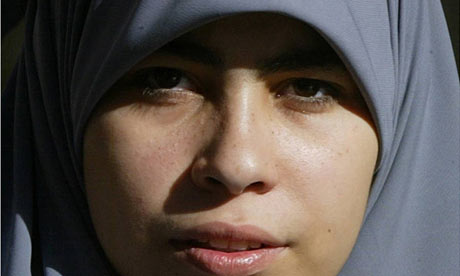
A Muslim woman is not allowed to go outside of her home with her head uncovered. Hijab can be translated into a clock or a coat which covers a woman’s body, including her head and her face. It’s not necessary that women wear a hijab, they just have to make sure that your clothing is decent enough and is not revealing any of your body part. Modern interpretations of the Qa’aran have now enforced women to wear a hijab in social circles as a way to protect them from the dirty stares of men and men who have dirty minds. It is believed that whenever men see a woman they acquire this very sick kind of idea in their mind about that woman. No one knows how does a man’s mind works but God knows therefore to protect her from the negative thinking of men, he asked her to cover herself whenever going out.
2.Travelling alone
This issue is quite debatable among scholars, especially when they come to discuss whether or not women could go perform Hajj without Mahram (conditional upon the presence of just companions of course). Their differences pertain to whether they take the letter (face value) of the Prophet’s Hadeeths related to this issue or the purpose of it and why the Prophet PBUH gave that specific verdict, and whether it was related to conditions/constraints at the time or it is just beyond time, culture, and specificity in general…
We should not, as Muslims, argue too much in Fiqhi opinions, as too much dispute on those issues would cause discord (fitna) among brothers and sisters.
In Islam it is believed that traveling involves hardship and exhaustion and because of the weakness a woman and the need to have someone to help her and stay by her side, it is forbidden for a woman to travel. Things may happen to her that may cause her to lose control.
A Muslim woman may may live alone and will need to be subject to the condition that she is trustworthy and is not seen as a woman of dubious character. With regard to a woman travelling alone, it is just not allowed.
3. Marrying non-Muslim men
A Muslim women is not allowed to marry a non-Muslim man. Such an order is supposedly given from God because in Islam the women follow the religion of the husband therefore if Muslim woman marries a non-Muslim man she won’t remain a Muslim anymore. A Muslim man is allowed to marry non-Muslim women but that women should be either Christian or Jew and should follow a holy book.
4. Disobeying husband
A Muslim wife should be as obedient as she can to her husband. This preserves the nuclear family and protects it from collapsing. This is part of Islam’s organizing of the family structure.
One should note that a wife’s obedience to her husband falls into one of four categories:
1- To ask her to do something this is commanded by Islam, such as the five prayers. Here the wife must obey her husband, and she would be considered sinful from two perspectives if she fails to obey.
2- To ask her to do something which is beneficial to him, or to refrain from doing something which is harmful to him, such as things which have to do with his food or clothes. She should obey him here unless there is a valid excuse not to.
3- To ask her to do something which falls into her personal affairs, such as asking her to give him money or forbidding her from speaking to a friend for no good reason. Here she can obey him if she wants but she does not have to. She should consider the benefit and harm of such obedience.
4- To order her to disobey Allah’s commands, and here she must disobey her husband.
It is also a woman’s duty not to leave the house unless the husband permits it. She should also never sleep outside the house unless she has permission.
5. Physical interaction with other men
Physical interaction between man and a woman is not permitted in Islam. You are not allowed to interact (touch) any other man or woman except for your own spouses, this scenario is applied for both the genders. A woman is not allowed to indulge with any men other than her own husband. Communication is allowed to a minimal. It is well suited that a man should hangout with men and a woman should hang out with women because it does not lead to the birth of any unmoral thought in the hearts of men and women, according to modern Islamic laws.
Terrorism is not a new phenomena. Although it has been used since the beginning of recorded history, it is still very difficult to define. Terrorism can be best described as both a tactic and strategy; a crime and a holy duty; a justified reaction to oppression and an inexcusable abomination. Obviously, it depends on whose point of view you are representing. Terrorism has often been an effective tactic for the weaker side in a conflict. As an asymmetric form of conflict, it confers coercive power with many of the advantages of military force at a fraction of the cost. Due to the secretive nature and small size of terrorist organizations, they often offer opponents no clear organization to defend against or to deter.
The United States Department of Defense defines terrorism as “the calculated use of unlawful violence or threat of unlawful violence to inculcate fear; intended to coerce or to intimidate governments or societies in the pursuit of goals that are generally political, religious, or ideological.” Within this definition, there are three key elements—violence, fear, and intimidation—and each element produces terror in its victims. The FBI uses this but defines it in a much more specific way: ”Terrorism is the unlawful use of force and violence against persons or property to intimidate or coerce a government, the civilian population, or any segment thereof, in furtherance of political or social objectives.” The U.S. Department of State defines terrorism to be ”premeditated politically-motivated violence perpetrated against non-combatant targets by sub-national groups or clandestine agents, usually intended to influence an audience”. There again is not cohesive definition to this broad term.
Outside the United States, there are even greater variations in what features of terrorism are emphasized in definitions. The United Nations produced another definition of terrorism in 1992; ”An anxiety-inspiring method of repeated violent action, employed by (semi-) clandestine individual, group or state actors, for idiosyncratic, criminal or political reasons, whereby – in contrast to assassination – the direct targets of violence are not the main targets.” The most commonly accepted academic definition starts with the U.N. definition quoted above, and adds two sentences totaling another 77 words on the end; containing such verbose concepts as “message generators” and “violence based communication processes”. Less specific and also less verbose, the British Government definition of terrorism from 1974 is ”…the use of violence for political ends, and includes any use of violence for the purpose of putting the public, or any section of the public, in fear.”
All in all, terrorism is seen as a criminal act that influences an audience beyond the intended victim. The strategy of terrorists is to commit acts of violence that draws the attention of the people, the local government, and the world to their cause. The terrorists plan their attack to obtain a paramount publicity, choosing targets that symbolize what they oppose. The effectiveness of the terrorist act lies not in the act itself, but in the public’s or government’s reaction to the act. For example, in 1972 at the Munich Olympics, the Black September Organization killed 11 Israelis. The Israelis were the immediate victims. But the true target was the estimated 1 billion people watching the televised event.
As you know, in 1993, al Qaeda tried to blow up the World Trade Center. They just failed on that occasion. And we, the United States, had been the victim of terrorist attacks by al Qaeda on more than a handful of occasions in the 1990s. What happened on 9/11 that is so important is that they proved beyond a doubt that they were not the gang that couldn’t shoot straight, which is what we thought was the case before 9/11. When we realized just how competent and dangerous they were, we then began to hypothesize what might happen if they got ahold of weapons of mass destruction, and particularly, if they got ahold of nuclear weapons. So the terrorist problem has been with us for awhile, and most IR theorists have spent some time studying it. But what has changed over the past year is the level of threat. We understand that we’re up against a much more formidable and much more dangerous adversary than we thought was the case throughout the 1990s. So that’s point number one.
Point number two is the question of what does a Realist theory of international politics have to say about terrorists? The answer is not a whole heck of a lot. Realism, as I said before, is really all about the relations among states, especially among great powers. In fact, al Qaeda is not a state, it’s a non-state actor, which is sometimes called a transnational actor. My theory and virtually all Realist theories don’t have much to say about transnational actors. However, there is no question that terrorism is a phenomenon that will play itself out in the context of the international system. So it will be played out in the state arena, and, therefore, all of the Realist logic about state behavior will have a significant effect on how the war on terrorism is fought. So Realism and terrorism are inextricably linked, although I do think that Realism does not have much to say about the causes of terrorism.
That is why we turn to another source ton understand terrorism.
Since 11 September 2001, there were many papers being written by scholars who apply game theory to the study of terrorism. Game theory is an appropriate tool for studying terrorism for six reasons. First, game theory examines really well the strategic interactions between terrorists and a targeted government, where actions are interdependent and, thus, cannot be analyzed as though one side is passive. Second, strategic interactions among rational actors, who are trying to act according to how they think their counterparts will act and react, characterize the interface among terrorists (e.g., between hard-liners and moderates) or among alternative targets (e.g., among targeted governments, each of which is taking protective measures). Third, in terrorist situations, each side issues threats and promises to gain a strategic advantage. Fourth, terrorists and governments abide by the underlying rationality assumption of game theory, where a player maximizes a goal subject to constraints. Empirical support for terrorists’ rationality is given credence by their predictable responses to changes in their constraints – e.g., the installation of metal detectors in January 1973 led to an immediate 2 substitution away from skyjackings into kidnapping. Fifth, game-theoretic notions of bargaining are applicable to hostage negotiations and terrorist campaign-induced negotiations over demands. Sixth, uncertainty and learning in a strategic environment are relevant to all aspects of terrorism, in which the terrorists or government or both are not completely informed. Game Theory is the best international relations literature to turn to when trying to understand terrorism.
Keeping Game Theory in mind, this top 10 article takes a look at 10 terrorists acts on American soil. It is ranked based on number of fatalities/injuries and the strength of the terrorist act itself. Top 10 list is writing this article in commemoration of the tragic events of the Boston Marathon in April of 2013.
1. September 11, 2001
Fatalities: 2,993; Injuries: 8,900
Any Top 10 List about Terrorism should begin with the September 11, 2001 attack as it was the largest of its kind on American soil. Initiated by an extremist organization named Al Qaeda, and its powerful leader Osama bin Laden, the attack led to America’s entrance War On Terror.
The attacks themselves were coordinated affairs: 19 members of Al Qaeda managed to hijack four airliners believing they were doing so for Jihad. Two of these planes were crashed into New York City’s World Trade Center. A third plane was crushed into the Pentagon in Washington DC. The fourth plane, which is believed to have been headed for targets in Washington DC as well, crashed into a field in Summerset County, Pennsylvania, after passengers attempted to regain control of the plane from the hijackers.
The damage was horrific. Both World Trade Center towers were demolished – crashing to the ground within less than 2 hours of impact. The Pentagon was heavily damaged as well. 9/11 is the most lethal attack carried out against the US, and continues to have ramifications in the nation’s foreign and domestic policies.
Following the September 11, 2001, terrorist attacks on U.S. soil, feelings of uncertainty immediately ensued regarding national security as fear loomed of possible future attacks. At the same time, feelings of uncertainty resounded regarding exactly what impact these attacks would have on the economies of both the United States and the global community. Such uncertainty was warranted given that the United States was already in the midst of a recession.
In addition to striking at the heart of the entity that symbolizes US military capability (the Pentagon), the attacks also struck an important economic symbol (the World Trade Center complex), resulting in a four-day hiatus of Wall Street trade activities. An attempt to predict the impact of these events on the economy resulted in the formation of basically three camps of forecasters. One set of forecasters—which consisted of an insignificant few—projected the economy would worsen, causing a deepening in the recession and a loss of U.S. economic hegemonic power. A second camp of forecasters—and the majority of forecasters—believed that, beyond New York’s economy, the attacks would not alter the country’s economic direction in which it was already headed. In essence, barring another attack, the recession would continue. A third camp of forecasters projected benefits to result from the attacks in the form of an increase in spending on security and technology development needed to adjust to globalization and all that comes with it.
Indeed, the United States and the international community for the most part were in shock. First, the events that transpired on that day were not like any other catastrophe to occur within the United States. Second, US stock markets halted for four business days and stocks fell immediately in the re-opening days of the stock market, with the Dow Jones falling 684.81 points on re-opening day; the 9/11 attacks simply fueled more concern given that the markets were already undergoing tumultuous times with the “dancing in the dollars” era coming to a close by year-end 2000. Third, while economic growth slowed immediately following the attacks, the US economy was already in a recession with consumer confidence declining throughout the months prior to the terrorist attacks. Finally, the United States had just experienced a very tumultuous close presidential election. As such, the 2000 election resulted in a divided country, with many political pundits quickly blaming both the outgoing Clinton administration and, to a lesser extent, the current Bush administration for failing to prevent these attacks.
Needless to say, as for the Bush administration, initially most political views seemed to rally around the flag. Yet, as time passed, such sentiments waned as the country grew “war weary” after finding itself engaged in fighting two wars with the second war being recognized as a mistake altogether.
While acts of terror seem to be carried out primarily by religious extremists, this wasn’t the case with the number two entry on our top 10 list.
At 9:02 a.m. on April 19, 1995, a rental truck filled with explosives detonated in front of the nine-story Alfred P. Murrah Federal Building in downtown Oklahoma City. The powerful explosion blew off the building’s entire north wall. Emergency crews raced to Oklahoma from across the country, and when the rescue effort finally ended two weeks later the death toll stood at 168 people, including 19 young children who were in the building’s day care center at the time of the blast. More than 650 other people were injured in the bombing, which damaged or destroyed more than 300 buildings in the immediate area.
A massive hunt for the bombing suspects ensued, and on April 21 an eyewitness description led authorities to charge Timothy McVeigh, a former U.S. Army soldier and militia sympathizer, in the case. As it turned out, McVeigh was already in jail, having been stopped a little more than an hour after the bombing for a traffic violation and then arrested for unlawfully carrying a handgun. Shortly before he was scheduled to be released from jail, he was identified as a prime suspect in the bombing and charged. That same day, Terry Nichols (1955-), an associate of McVeigh’s, surrendered in Herington,Kansas. Both men were found to be members of a radical right-wing survivalist group based in Michigan.
On August 8, Michael Fortier, who knew of McVeigh’s plan to bomb the federal building, agreed to testify against McVeigh and Nichols in exchange for a reduced sentence. Two days later, McVeigh and Nichols were indicted on charges of murder and unlawful use of explosives.
3. Atlanta Olympic Games Bombings
Fatalities: 2; injuries: 200
A bomb explodes at Centennial Olympic Park in Atlanta during the Summer Games, killing two people and injuring more than 100. Eric Robert Rudolph was arrested in 2003 in connection to this attack and also an attack on an abortion clinic in 1998. He plead guilty and was sentenced to life in prison.
Two people were reported to have been killed and firefighting officials said as many as 200 people may have been injured. The explosion happened at 0125 local time during a rock concert in the Centennial Olympic Park.
Warning came too late. After the blast, the area was immediately surrounded by police and cordoned off.
The nearby press centre was closed because guards feared another explosion. Eyewitnesses described a scene of chaos and carnage. People lay on the ground with head and other injuries as police tried to clear the area.
The police say they received a phone call warning of the bomb and describing its location but it was too late to evacuate the park. They did, however, manage to clear the immediate vicinity.
It is reported the caller’s voice had the characteristics of a white American male.
Security at the Games – already billed by the authorities as the largest peacetime security operation for a public event in American history – has been stepped up with extra bag searches and regular sweeps for explosives.
‘Act of vicious terror’
It seems most visitors are determined the attack will not stop them enjoying the Games and events such as boxing, diving and track and field attracted healthy numbers of spectators today.
President Bill Clinton has reacted defiantly saying the Olympic Games should carry on as planned to show the nation would not be cowed by acts of terrorism.
4. Boston Marathon Bombing
Fatalities: 3; Injured: 180
April 15, 2012’s terror attack on the Boston Marathon killed an 8-year-old boy watching with his family, a 29-year-old woman and a Boston University graduate student from China. More than 180 others were injured, many losing limbs as a result of horrific twin blasts near the race’s finish line, in the heart of the city.
For some, the attacks brought immediate comparisons to the September 11, 2001, attacks, partly because of reports that investigators talked with Saudi Arabian citizens who were at the site — even though a U.S. official said one Saudi male questioned was simply in the “wrong place at the wrong time.”
For others, the bombs that exploded near the finish line of the marathon Monday afternoon felt more homegrown, more akin to the April 1995 Oklahoma City bombing that left 168 people dead or the 1996 Atlanta Olympics bombing that killed two.
Authorities took pains to caution Americans against jumping to conclusions.
Barack Obama in a televised conference said that investigators don’t know whether the bombing was a work of an organized group or a disgruntled loner. Nor do they know if the violence came from within the United States or stemmed from a plot hatched overseas.
The Bomb:
Federal agents zeroed the next day zeroed in on how the Boston Marathon bombing was carried out – with kitchen pressure cookers packed with explosives, nails and other lethal shrapnel – but said they still didn’t know who did it and why.
An intelligence bulletin issued to law enforcement and released late Tuesday included a picture of a mangled pressure cooker and a torn black bag the FBI said were part of a bomb.
The FBI and other law enforcement agencies repeatedly pleaded for members of the public to come forward with photos, videos or anything suspicious they might have seen or heard. Top 10 List will keep you updated as soon as information emerges.
Details (Updated 04-20-13):
On April 18, in a 5:20 p.m. news conference the FBI released photos and a video of two suspects, and needed the help of the public to identify them. The FBI said that one of the suspects had been seen placing a backpack at the bombing scene minutes before the second bomb exploded.
Suspects at the Boston Marathon prior to bombing. Authorities identified the people in the video as two brothers: 26-year-old Tamerlan Tsarnaev and 19-year-old Dzhokhar A. Tsarnaev. Ethnic Chechens from the North Caucasus, the two emigrated to the United States in 2002 and had been living in Cambridge, Massachusetts. They had previously lived in Tokmok, Kyrgyzstan, and Makhachkala, Dagestan, Russia. Both brothers are Muslims.
Tamerlan Tsarnaev (October 21, 1986 – April 19, 2013) was killed during a massive manhunt launched in the early hours of April 19 .He was born in Russia. He had been arrested in 2009 for domestic assault and battery after assaulting his girlfriend. He was not a U.S. citizen, but living in the country as a permanent resident. He had been quoted as saying, “I don’t have a single American friend, I don’t understand them.” Top 10 List wonders why.
Dzhokhar Tsarnaev (born July 22, 1993) at the time of the incident was a student at the University of Massachusetts Dartmouth, with a major in marine biology. He was born in Kyrgyzstan. He became a U.S. citizen on September 11, 2012. On television, his uncle, living in Maryland, pleaded with Dzhokhar to turn himself in. He was found and taken into federal custody following a standoff in the evening of April 19 and is now in critical condition.
The Manhunt:
Immediately after photos were released, a shooting followed on the campus of the Massachusetts Institute of Technology, near the Stata Center (Building 32) on April 18 at 10:48 p.m. EDT (02:48 UTC, April 19). Multiple shots were fired and Sean Collier, 26, an MIT police officer from Somerville, Massachusetts was critically wounded. Collier was sent to hospital where he was pronounced dead.
The suspects next carjacked a silver Mercedes SUV in Cambridge and forced the owner to use his ATM card to obtain $800 in cash. They released the man after the ATM cash limit was reached. The suspects admitted to the man that they were responsible for the Boston bombings. Police chased the vehicle to Watertown, Massachusetts. Police in Watertown reported that they exchanged gunfire with two suspects following the MIT shooting, with explosions and automatic weapon fire heard. Later that evening, The Boston Globe reported that the shooting suspects were the same men being sought in the Marathon bombings. The two suspects exchanged gunfire with police and even threw a pressure cooker bomb at them, which exploded in midair after the lid failed. One suspect, Tamerlan, was captured and killed, whole the other, Dzhokhar, managed to escape.
In the morning of April 19, after the car chase and a bloody xchange of fire with law enforcement, Tamerlan Tsarnaev was taken to Beth Israel Deaconess Medical Center, where he died of multiple gunshot wounds, he had sustained in the shootout. The second suspect, Dzhokhar Tsarnaev.The brothers had tossed pipe bombs from their car at officers who pursued them into Watertown from Cambridge. Early on April 19, Watertown residents received reverse 911 calls asking them to stay indoors.
Thousands of law enforcement personnel participated in a door-to-door manhunt in Watertown, as well as following up other leads, including at the house the brothers shared in Cambridge. The father of the suspected Boston Marathon bombers, Anzor Tsarnaev, speaking from his home in Makhachkala in Dagestan, encouraged his son to give up peacefully: “Give up. Give up. You have a bright future ahead of you. Come home to Russia.
The manhunt ended in the evening of April 19 when authorities surrounded Dzhokhar A. Tsarnaev, who had taken refuge under the canvas cover of a Watertown resident’s boat. He was discovered by the boat’s owner’s neighbour, David Henneberry, when, shortly after the “shelter-in-place” order was rescinded, Henneberry noticed that the tarp covering the boat was loose and the lines securing the tarp were cut. He lifted the tarp to investigate and saw a human body lying in a pool of blood. Tsarnaev’s presence was later verified through thermal imaging cameras. He was taken into custodyafter a standoff, and transported to Beth Israel Deaconess Medical Center where he is reportedly in serious condition.
5. Bombing at WTC, 1993
Fatalities: 6; Injured: 1040
Bombing at World Trade Center, New York City, NY took place the first time in February of 1993; truck bomb in basement parking garage started fire; 5 Islamic suspects arrested in March; 6 killed, 1,040 injured; damages estimated at $550 million to $1.1 billion.
It took officials 11 hours to completely evacuate roughly 50,000 people from the buildings.It left a gaping hole in the wall above the path underground station. Most of those who died are believed to have been crushed by the station ceiling.
It ripped through three floors of concrete, scattering ash and debris and set off a fire that sent choking smoke and flames up through one of the 110-story “Twin Towers”.
Total pandemonium!
Thousands of office workers were trapped as smoke filled up through the buildings. With no working lifts or lighting there was total pandemonium.
People did not know whether to stay in their offices or to be brave and journey down via the smoke-filled stairwells.
Some of the songs in this list have gone on to become legendary. However, this does not mar the fact that they are overrated.
1. Light my Fire- The Doors
This popular song is boring and the chorus is dull and an insult to anybody who listens to it. While it is definitely vocally dull, something that comes as a shock when someone like Jim Morrison is singing, it is also lyrically dry. This ordinary song is definitely overrated.
2. Radiohead – Creep
Even though Radiohead is a splendid band and have undoubtedly released songs that are incredible, “Creep” isn’t one of them. It came out during the 1990s when the American culture was going through an awkward phase. The lyrics represent the situation at hand and therefore, ruin the song. However, it became very popular and thus, overrated.
3. Every KISS song
KISS did very well as a band but all their songs are extremely overrated. If you listen to all their songs at a stretch, you can practically feel your brain turn to mush. Their lyrics are senseless and their music is boring- what more can one ask for?
4. Sexyback- Justin Timberlake
While almost all his songs are literally mind-numbing because of his high-pitched voice, this one really takes the cake. The beat is catchy which is why the song did well but the listeners clearly learnt very long back that they must tune out his lyrics. A single verse is repeated again and again and then the song ends. The reason it did well is quite a mystery.
5. Unforgiven by Metallica
While this is definitely not as bad as the above mentioned songs, it is definitely overrated. The lyrics are okay, the beat is okay and the vocals are pretty average too. Other songs by Metallica such as “Master of Puppets” and “One” are definitely much better than “Unforgiven”.
20 April has become associated with the consumption of cannabis and the entire cannabis subculture through the notion of ‘four-twenty’.
The earliest use of the term cannabis began among a group of teenagers in California in early 1970s who used the term as a code for a plan to search for an abandoned cannabis crop that they had learned about. They designated the Louis Pasteur statue as their meeting place, and at almost half past 4 they would meet and enact the plan “4:20 Louis”. The phrase was eventually shortened to “4:20″, which ultimately became the code word which teens used to refer to pot smoking.
Here is a list of 10 unlikely marijuana friendly destinations.
1. Kingston, Jamaica:
When cold weather arrives, or any time you want a ganja vacation, you probably want to go to Jamaica. Land of Bob Marley, with marijuana growing an agricultural livelihood for many islanders, cannabis lovers across the world flock to the Caribbean to get reggae ganja fun in the sun.
Jamaica has a lot going for it, and you find lots to love there, but It’s also a third world country plagued by poverty, income inequality and crime. If you want a safe and fun Jamaican ganja vacation, you need to read this carefully.
I’ve visited Jamaica three times,and I’m giving you a very stern look at Jamaica as a vacation destination. Here’s the first thing to remember: you can’t just go anywhere and do anything you want in Jamaica as if you were on a tourist trip to Holland.
Even though marijuana is illegal on the island, lots of people will try to sell you ganja there. You get offered ganja deals before you even got out of the airport, by taxi drivers who pick you up from the airport, by street vendors, and even by children and police officers.
2. Amsterdam, Netherlands
Hundreds of coffee shops where marijuana and hashish can be purchased over the counter and consumer. Amsterdam is the home of the Annual High Times Cannabis Cup, which is held ever November and boasts incredible museums and parks.
Info about 2012 ban:
A law that would have banned foreigners from using Amsterdam’s famous cannabis cafes was dropped by the city’s mayor just mere months after the Netherlands first began enforcing the restrictions in other provnces.
The tourist drug ban went into effect in three of the country’s southern provinces earlier this year and was due to expand to the rest of the country — including Amsterdam — by 2013, the Associated Press reported.
Mayor Eberhard van der Laan said that Amsterdam’s 220 coffee shops where marijuana and hashish are openly sold and consumed will remain open to the public.
3. Toronto, Canada
“Canada’s Eastern regions boast some excellent marijuana and many businesses, especially those located on Yonge St. Although it is against the law to possess marijuana in Canada, enforcement agencies are primarily focused on individuals guilty of trafficking the drug. Marijuana users in Toronto report that police officers are lenient to those who are discreet.
But just as Colorado and Washington loosened up, Canada tightened its drug laws in November of 2012.
On the very same day as the U.S. election, the Canadian federal Safe Streets and Communities Act went into effect, producing a mandatory minimum penalty for marijuana possession and production: one year in jail for more than 3 kg, and six months for between six and 200 plants.
Carl Valle, Press Secretary for Prime Minister Stephen Harper says that these drugs are illegal because of the harmful effect they have on users and on society, including violent crimes. The government therefore has no interest in seeing any of these drugs legalized or to make them more easily available to youth.
A new poll done in 2012 showed that a majority of Canadians support loosening the country’s marijuana laws, a stance that’s starkly out of sync with the federal government’s pot policy.
According to the poll, released Tuesday by Toronto’s Forum Research, 65 per cent of Canadians favour either the legalization and taxation of the drug, or decriminalizing it in small amounts.
Although the laws have been tightened, the streets and some of the cafes are still puffing.
4. Manama, Bahrain
If you get caught you will probably spend 2 to 4 weeks in prison and will be interrogated harshly and then released on bail until your case goes to court. The judge might sentence you to 6 months in prison minimum and 10 years maximum – so be careful.
There is no marijuana in Bahrain available, but high quality hashish is always an option. It is hard to buy it off the streets with no connections, but you could always try going to bars on exhibition road. A Thai hooker might also fix you up, if she doesn’t she will know someone who will. Everybody smokes hash in Bahrain, but are really serious about keeping it quiet.
Prices do differ with every dealer in Bahrain and dealers don’t sell the drug in grams. You could get a piece as big as your thumb for 20 bd – 50 $.
5. Barcelona, Spain
Smoking in public in Spain isn’t 100% tolerated, but you can possess up to 40 grams legally and major cannabis events such as Spannabis are the talk of town.
There are many major cannabis seed breeders based there, so it certainly has its place. In my experience, as long as you don’t make a scene you can smoke it pretty much anywhere.
Barcelona is a stunning city to visit, Guadi architecture is everywhere and nice beaches!
It’s never too early to see what’s under the hood for the top 10 car makers of the world. Because of the peculiarities of the industry, some 2014 models have already been shown at auto shows like Paris and Frankfurt or pictures have been released in advance to stir the pot some more.
So let’s gaze into our crystal ball for some clues about which new models will be on display at 2013’s largest auto shows in preparation for 2014 season. We can’t wait to see what the shows have to offer and don’t mind to dream of the big in the meanwhile.
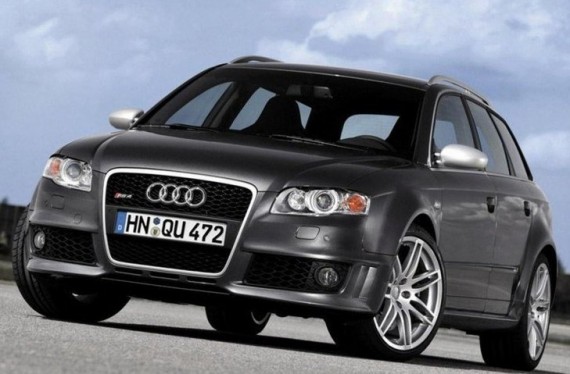
1. 2014 Audi RS4 Avant
RS is the best of its kind when it comes Audi cars. The previous RS4 ranks high – very high on almost everyone’s car wish list or at least those who can afford it. This one will kill with an expected minimum of 450 hp.
Power for the model is expected to be a 4.2-liter V8 engine that generates around 450 PS (331 kW / 444 hp) and 430 Nm (317 lb-ft) of torque. It will be coupled with Audi’s Seven-speed S tronic transmission and the company’s best Quattro all-wheel-drive system. We also expect upgraded high performance shocks & struts. It should enable the RS4 Avant to accelerate from 0-100kph (0-62mph) in just under 5 seconds before reaching an electronically limited top speed of 155 mph (250kph).
As Audi keeps producing more of its RS line into U.S. showrooms, exchange rates are continuing to improve and emissions regulations approach parity with Europe, meaning the RS3 is a possibility. The TT and RS5 models are due late this year and sometime after that, possibly in the 2013 calendar year as a 2014 model, the RS4 is expected to arrive. We believe that the introduction of the RS5 will be a solid indication of the performance levels to expect from the RS4. Audi knows that competition is stiff for the RS5 and its production has taken longer than usual for a company with a long history of creating performance sedans and coupes.
2. 2014 Ferrari Enzo
Luxury auto lovers are debating over the Italian luxury car maker’s latest incarnation, which will arrive at the Geneva Motor Show in March of 2013. Car lovers are more excited than ever before about the F1-derived KERS hybrid system paired with a V12 engine, which Ferrari has never done before. Renderings and spy video of the mystery car, the car has a sleek, very low-to-the-ground body that is without a doubt designed with aerodynamics in mind.
Information is limited, but here’s what is known so far. Unlike the F12berlinetta, the design of the new Enzo—internally designated the F70— will not be a collaborative effort with Pininfarina, but will be an internal affair instead. A V-12 will likely be the engine of choice, combined with a KERS hybrid system with all-wheel-drive traction.
3. 2014 Aston Martin Vanquish
This new 5.9 liter V-12 sits lower and lighter, blending much more power (565 hp, 457 lb-ft) than any old mill’s 510 hp, while still claiming greater fuel efficiency, thanks in part to the incorporation of variable valve timing. Connecting the power plant to the 6-speed automated manual rear transaxle is a carbon fiber prop shaft surrounded by an alloy torque tube. Aston claims that 60 mph will arrive in 4.1 seconds, and that the Vanquish tops out at 183 mph.
Inside the car, there is a brand new interior, which reveals One-77-inspired stitch patterns and details like a haptic touch surface on the center stack. The cockpit has been expanded for less of a cocooning effect, while the “boot” offers 60 percent more space.
So all you have to do is open the upwardly tilting “swan” doors and go inside where you will be comforted by the pleasant leather interior. You can snuggle up to the imaginatively sculpted leather seats—some of which are available with teardrop-style quilted patterns. Oh, we cannot forget that Vanquish always offers Aston’s typically operatic sense of occasion, right down to the glass-capped key fob that slides into the dash and starts the big V-12 engine.
4. 2014 C7 Chevrolet Corvette Stingray
The 2014 Corvette Stingray is designed to withstand convention. It is made to dismiss the ritualistic and the clichés. Created to oppose the expected, eliminate the empty traditions and discover the undiscovered. Two functional parts are all that remain of the past. Purpose alone is sacred.
The machine is totally new. But some already known cues are reappearing. Distinct aeronautical lines. A flowing, aerodynamic exterior. A thin fastback finish. For the first time in decades, a stunning machine emerges with the aesthetic impact and the performance prowess worthy of the Stingray emblem.
This is the most ambitious 3000-pound weight target coming out on the market, C7 is constructed like an aircraft. The three-rail space frame GM patented for C5 continues with greater and better improvements. The hydroformed-aluminum main members developed for Z06 and ZR1 are now standard across all C7s, an upgrade enabled by transferring frame manufacturing from an outside supplier to the Corvette’s Bowling Green assembly plant. Carbon-fiber (CF) floor and bulkhead panels adhesively bonded between the central backbone and the perimeter rails augment structural stiffness. We also expect CF to replace all the sheet-molded fiberglass exterior panels. A single-piece lift-off roof—a Corvette feature since 1984—remains standard on the coupe.
5. 2014 BMW i3
This model is unlike any other BMW car you’ve ever seen before, the compact hatchback i3 is made of lightweight material and with super-strong carbon fiber — the same stuff used in the fuselage of the 787 Dreamliner. More importantly, the i3 is BMW’s first all-electric car. Its range is said to be around 100 miles, and anxious drivers can add a small motorcycle-like gasoline engine that extends the EV to 190 miles. The i3 is expected to go on sale late in 2013 for about $45,000 and there are limited cars. Production versions will have doors that are solid and not transparent below the belt line.
Porn Stars are frequently criticized for being unintelligent and shallow, but let’s be truthful, they were smart enough to make a living and earn well over 1 million; Jenna Jameson earns $30 million. These stars have been successful academically as well as financially, forming successful enterprises outside of the porn industry and participating in Oxford debate team and leading them to victory. These top 10 porn stars have proven well beyond the doubt that they have big brains to match their large LARGE assets.
1. Annie Sprinkle
Sprinkle, born in 1954, is the first porn star to have earned a Ph.D. She earned her doctorate in Human Sexuality from the Institute for Advanced Study of Human Sexuality in San Francisco, California. She now is a renowned performing artist and sex educator, using her experience as a porn star to educate others about sex and porn.
One of her well-known theater and performance art pieces is her Public Cervix Announcement, in which she invited the audience to “celebrate the female body” and view her cervix with a speculum and a flashlight. She also performed in The Legend of the Ancient Sacred Prostitute, in which she did a “sex magic” masturbation ritual right on stage. WOW!
She got herself the name “Annie” when she started working in porn industry. One night she had an epiphany, as if from the goddess herself. She thought the name was appropriate because she was attracted to the sprinkles over ice cones and because she loves waterfalls, urine, vaginal fluids, sweat and anything that is wet. So the name ‘Annie Sprinkle’ was a perfect fit for her.
2. Sasha Grey
Sasha Grey is arguably one the most famous porn star in the world right now. At age 24, she is an actress, model, musician and pornographic actress. Throughout her adult film career, she was profiled by several pop culture magazines and had won several AVA Awards between 2007 and 2010.
Although she has no academic background, she regularly espouses concepts you would find in upper division undergraduate courses like existentialism, German expressionism, and French New Wave; with this, Grey has built a brand around herself as being a bit brainier than your average porn star.
If you want to meet Sasha Grey and have a piece of her, buy her photo book – was released on May 29, 2011. Her second book, The Juliette Society, an erotic novel, will soon be released as well.
3. Lisa Sparxxx
This very popular porn star holds the world record for having sex with 919 men in just one day. She has a Master of Arts degree in Multimedia with a minor in Business from the University of Kentucky.
She even started her own affiliate program via her personal website which receives tens of thousands of visits a day. This program she developed allows her to keep over 50-65% of initial sales from the ads/sites. She runs the website and her own production company with her husband.
On her official site, she describes herself as the all-natural country girl and slut wife who turned herself into a porn star. She got into the porn business because she loved being very sexual. She claims to have had sex for the first time when she was 16 and got married at 18, right out of high school.
If you’re wondering what her cup size is? She is a 36DD.
4. Ron Jeremy
Ron Jeremy earned a bachelor’s degree in Education and Theater and a master’s degree in Special Education from Queens College. He later went on to teach special education classes in the New York City area. Being the most distinguished and celebrated male porn star in the industry, Jeremy has gone on to take part in lectures and debates around the world that defend and support the pornographic industry. He has even visited various university across the United States and Canada as part of his porn debate tour in 2006.
5. Asia Carrera
Asia Carrera was born in New York City in 1973 to a Japanese father and a German mother. She studied piano as a child which is perhaps where she gets her fast fingers. She was so talented that she performed at Carnegie Hall twice before she had turned 15.
Throughout her adult film career, she starred in over 275 adult films and also has the IQ of 156. She attended Rutgers University from where she earned herself a full a full scholarship and double-majored in Business and Japanese. She never quite finished her full degree, though, because she made more money at the stripping job she had during college and according to her just “had more fun”. She’s now gone on to own the rights to some of her most loved films, especially “A is for Asia”, and has become one of the most well-known adult film stars of all time. She has even proclaimed herself the “nerd of porn” and is an avid player of Unreal Tournament.
Her personal life has not been the greatest. In September 1995, Carrera married adult film director Bud Lee, who she later divorced. She then married a nutritionist and author Don Lemmon in 2003 and moved to Utah. Lemmon, however, was killed in a car accident in 2006 in Las Vegas. Carrera was 8 months pregnant with their second child. After growing tired of impostors claiming to be her on MySpace, she posted her own authentic profile.
On April 14, 2010, Carrera confessed on her blog that she became an alcoholic after the death of her husband, Donald, and that she had joined Alcoholics Anonymous, and was in her third week of sobriety. She emphasized that she still did not believe in God.
Memorable Quote: “Religion is silly. When you’re dead, you turn into a source for future flowers and plants . . . I don’t know what’s on the other side of death and it scares me. Darkness and nothingness scare me. I’d rather face the miseries of my day-to-day life than turn into darkness.”
Adrenaline is a dangerous thing. Although useful in small doses, it’s highly addictive and, like any drug, your tolerance only increases the more you get. That’s how you find yourself, one day, looking at a bungee cord tied to a precarious bridge, 1000ft above a churning river and thinking ‘what if we added crocodiles?’ Here are 10 sports specifically designed for those who reached the absolute limits of intensity, then leapt off them on a flaming motorbike, giving fate a double finger:
1. BASE Jumping
BASE Jumping is either shockingly admirable or utterly, utterly insane. With at least 200 confirmed fatalities since 1980, a sudden gust of wind, a split-second miscalculation or simple bad luck are all that’s needed to reduce you to a sticky mess they’ll have to scrape up with a shovel. The competitive element comes in seeing who can go the longest without dying.
2. Ghost Riding
The rules of Ghost Riding are simple: get in car. Start car. Wait until car has built up sufficient speed. Exit car and do tricks on roof as you cruise toward certain death. This ‘sport’ from the San Francisco area checks all the boxes required of the extreme pastime: it’s pointless, dangerous and predominantly enjoyed by young males so numbed by apathy it takes a near-death experience for them to feel anything at all.
3. Encierro
Running with the bulls at Pamplona, Spain is a rite of passage enjoyed by drunks, tourists and the insane; resulting each year in a handful of poor sods getting trampled, often by their fellow humans. Gorings and actual deaths are relatively rare (14 in the last century), but the statistics neglect to mention the number of underpants lost to sudden soiling.
4. Volcano Boarding
Like snowboarding, but down the side of an active volcano, Nicaragua’s latest (tourist) sport attracts thrill-seekers who want to combine the rush of hurtling down a mountainside with the thrill of doing it on a goddamn active volcano. Given the blending of speed and the potential for explosions it’s only a matter of time before Hollywood snaps it up for Point Break 2.
5. Buzkashi
Afghanistan’s national sport involves charging around on horseback, whip in hand, dragging a headless goat carcass behind you as you attempt to… actually, we’re not sure. While national leagues have mellowed the practice out a good deal, traditional forms of the game can last for days and are noted for their brutal violence.
6. The Iditarod Trail
Ever wanted to recreate Scott’s last expedition, but can’t get to Antarctica? Alaska’s race from Anchorage to Nome on the Bearing Sea has everything you require for your themed-suicide: bitter winds, endless night and temperatures routinely below -30c. Expect frostbite, hypothermia and frozen huskies; and for the winner… nothing. Just the glory of knowing you managed to survive.
7. Solo Climbing
What could make dangling high above the Earth, with only a sheer cliff face to cling to and a single rope between you and death even more extreme? Removing the rope.
8. Cheese Rolling
Every year, inebriated adults gather at Cooper’s Hill, England to hurl themselves headfirst down a steep slope in pursuit of a runaway cheese. Unsurprisingly there are injuries. The perfect blend of whimsy, drunkenness, and cheese, Cheese Rolling is for those who like their sports insane in more ways than one.
9. Cave Diving
Find an aquatic cave, preferably one with sub-zero temperatures, jagged rocks and aggressive marine life. Enter cave with little oxygen and no real plan, wash up dead on a beach 3 weeks later. That is cave diving; a sport that has claimed over 500 lives in half a century. It’s the deadliest sport on the planet, and will probably remain so, until someone finds a way of combining it with BASE jumping.
10. Train Surfing
Popular in Germany in the 80’s, Train Surfing disappeared for a while, only to resurface in South Africa a few years ago. The premise is simple: find a train and cling to it as it reaches speeds no human should ever endure. For maximum effect, try it on a speeding intercity.
Author: Alfie Davenport works for Ladbrokes Games. Whilst he enjoys the mild thrill of the occasional bet, he doesn’t think he has it in him to try out any of these crazy sports.
In 2010, you know you’re a scandalous woman if you have retained Gloria Allred as your attorney—not because you really have done anything terribly wrong, of course, but to protect your reputation and preserve your rights for telling your own story. Allred and her clients clearly have learned the most valuable lesson from all of history’s most scandalous women: The quality of the story trumps the historical facts like a full house beats a pair of deuces, and a woman serves her own best interests by telling her own story in her own way. History further demonstrates that a woman’s well-managed scandal can evolve into a tremendously successful career. Ten prominent examples make the case.
1. Cleopatra VII
Arguably history’s first political powerhouse woman: Generally known simply as “Cleopatra”—as in the Cleopatra, star of story, legend, and drama—the Egyptian queen departed from her fiercely Greek Ptolemaic predecessors, learning the Egyptian language and declaring herself a reincarnation of the goddess Isis. After Roman conspirators assassinated Caesar in 44BC, Cleopatra forged an alliance with Marc Antony and Caesar’s opposition. The political hook-up, however, paled by comparison with the historic consequences of their love affair. According to most storytellers, Cleopatra made conquest of all the ancient world’s most powerful men, seducing and them compromising them with her irresistible beauty and her even more compelling wit, charm, and intellect.
2. Lady Godiva
History’s first “uppity woman,” married to the Baron of Coventry, England, and champion of her oppressed people. To his wife’s considerable chagrin and over her repeated protests, the greedy and gluttonous Baron relentlessly taxed the people to support his own excesses. Finally, Lady Godiva wore down the Baron’s objections, and the two struck a deal: He would remit the taxes if she rode “naked” through Coventry; precise definitions of “naked” remain the subject of spirited debate among scholars, but artists always have chosen the no-clothes version, usually covering her with her own luscious, languorous locks. Jealous of his trophy wife’s considerable good looks, the Baron decreed that the townspeople had to shutter their windows as she cruised the main street. As the story goes, all but once citizen complied: the infamous “Peeping Tom” secured a permanent place in the history of voyeurism by drilling a hole in his shutters to catch a glorious glimpse of milady’s tenderest parts. For his troubles, Peeping Tom allegedly was struck blind. Lady Godiva took her brazen ride, and the Baron enacted the tax cuts as promised. History offers no record of the Coventry citizens’ living happily ever after.
3. Joan of Arc
Fifteenth century warriorette, who claimed she had visions from God instructing her to free France from English domination. Then uncrowned Charles VII sent nineteen-year-old Joan to the siege of Orleans, ostensibly as part of a relief mission. Once there, Joan scrutinized les vieux garcons battle plans, threw-out the old playbook, and lifted the siege in just nine days. She subsequently led French forces to several more quick and decisive victories, securing Charles VII’s coronation and the end of the dispute about his rights to the French throne. For her efforts on France’s behalf and because of her claims about divine intervention, an English Ecclesiastical Court found her guilty of heresy, promptly burning her at the stake. Twenty-five years later, Pope Callixtus III overturned her conviction and declared her a martyr. Joan of Arc was canonized in 1920 and promoted to one of the patron saints of the French.
4. Ma Barker
A classic example of the story far outstripping the facts: According to the popular press, and especially according to J. Edgar Hoover and his fledgling squad of G-Men, Ma Barker was a tough-talking, cigar-smoking, Tommy-gun toting criminal mastermind who orchestrated approximately 100 hundred heinous crimes—big bank heists, high-profile kidnappings, and murders—between 1931 and 1935. On January 8, 1935, the Feds nabbed “Doc” Barker, who unfortunately carried a map to the Barker-Karpis gang’s Ocklawaha, Florida, hideout. Eight days later, federal agents surrounded the house, ordering the gangsters to surrender. Instead, Fred Barker opened fire on the agents, initiating a protracted fire-fight; witnesses and participants agreed it lasted several hours. Both Ma and Fred died in the gun battle, and FBI spokespeople reported Ma was found with a machine gun in her hands. The government publicly displayed their bodies, ostensibly to discourage other gangsters and criminal entrepreneurs, but also to boost the FBI’s public image. Witnesses and historians since have proven she never participated in any criminal activity, and they allege that FBI agents planted the gun in her hands after she died.
5. Bonnie Parker (of Bonnie and Clyde)
Barely twenty-one when she began her notorious criminal exploits, Bonnie Parker was every bit as tough, sassy, and sexy as Fay Dunaway made her appear in the 1967 movie of her three-year crime spree with partner and lover Clyde Barrow. In the same way Bonnie and Clyde introduced explicit violence to the movies, the real-life Bonnie and Clyde introduced extreme and sometimes gratuitous violence into the relatively simple business of holding-up small rural banks and markets. The stylish villains of pulp fiction killed at least nine police officers and at least two innocent bystanders during their rampages across the Midwest and rural South. Arguably the first criminals to manage their own public relations, the couple posed for titillating and sensational pictures that inevitably found their way into the newspapers and newsreels of the early thirties. According to historian Jeff Guinn, “Without Bonnie, the media outside Texas might have dismissed Clyde as a gun-toting punk, if it ever considered him at all. With her sassy photographs, Bonnie supplied the sex-appeal, the oomph, that allowed the two of them to transcend the small-scale thefts and needless killings that actually comprised their criminal careers.” Bonnie and Clyde ultimately died in an attack by Louisiana law enforcement officials in 1934.
With innumerable bar drink recipes circulating across the web, it is really difficult for someone to find the perfect drinks for a cocktail party. Whether you are planning to throw a party, or going to want to hang out with friends and enjoy a night out, you need to know about the bar drinks. Everyone has a taste of his own, and that is the reason bar drinks vary from one place to another. A drink that is popular in the nightclubs of Las Vegas might not be the best one in the pubs of London. Therefore, it is always safe to possess some idea of the different types of bar drinks, and, at the same time, avoid embarrassing situations when you hang out with your friends or with your partner. As you know, the popularity of bar drinks varies from one place to another, and it is literally impossible for someone to collect information of every drink recipe. However, if you want, you can at least check out the top ten bar drinks that you can find in almost every bar. Whether you are planning for a home bar or just for partying with friends, this top ten bar drink list could be helpful.
1. Margarita
Margarita, one of the most popular cocktail drinks, is available in different variations. Conventionally, Margarita is known to be a cocktail of orange liquor, lime juice and tequila. Yet, there are other variations like blue margarita, blue lagoon margarita, apple margarita, coco margarita and many more.
2. Martini
If you are looking for a classic drink served in an old fashioned wine glass, Martini is for you. The cocktail, which is generally a mix of vodka and gin, can be served on the rocks or chill, depending on your taste. Yet, there are variations like bone dry martini, dry martini and many more.
3. Mojito
Someone who wants to get a little tipsy can surely opt for Mojito, which is a combination of rum, mint and sugar. This popular drink can refresh your mind in the summer days. Mojito, which was initially a popular bar drink of Cuba, is now popular in all tropical countries.
4. Bloody Mary
If you are looking for some vodka cocktail, you can surely opt for Bloody Mary. Made with a mixture of tomato juice and vodka, Bloody Mary can be the perfect drink for a winter morning. You can add some spices to garnish this drink.
5. Beer
Icy cold beer with white foam on its top is undoubtedly one of the most popular bar drinks across the globe. Though drinks made with beer are not classified as cocktails, it enjoys popularity in almost every bar. If you want to warm up yourself on the winter nights, beer is for you.
Even after the recession, most economies are still struggling to get out of the gutters. Most corporate organizations as well as small and medium sized business enterprises are still downsizing as a means of keeping their doors open come the next financial year. As a result, employees are not being paid the hefty packs they used to enjoy, i.e. bonuses and contributions. Unfortunately, the only thing that has remained constant amidst all of these turbulences is bills. Whereas, a majority of workers are experiencing a decline in their monthly earnings, the bills are continuously on the rise due to inflation.
If your day job is not cutting it for you as it used to or you have just been laid off, then it is high time you considered alternative ways of earning that much needed extra dollar. The supplement income that you earn from these extra jobs will help cushion you against the harsh economic times that a majority of folks are going through right now. Discussed herein are top ten ways to earn an extra dollar.
1. Become a freelancer
Thanks to technological development in internet technology, you can be able to work from home as a freelance. For instance, there are people who work as writers and editors for the numerous blogs found on the internet and are able to make good money for it. Given the tight budget that a number of businesses are operating on, it is possible to get a contract as a freelance agent. Moreover, there are particular sites, i.e. sologig.com that provides a platform for employers who would like to contract qualified personnel from any part of the globe at an affordable rate than they would have got locally. From these sites you will be able to find part-time or in some cases full-time work.
2. Sell your library
Having gone through high school, college and university, I’m pretty sure that you have a library of books that perhaps you are keeping for sentimental value or are hoping to pass them to your children. There are certain book store retailers, i.e. Barnes & Noble that can buy your textbooks at an attractive price. In addition, if you have a collection of classic novels, you can get good money for them by selling them at selected second-hand bookshops.
3. Sell rare coins
There are certain personalities, e.g. Susan Headley, who have etched a living for the last 6 years by finding and selling circulating coinage. She is reported to have earned up to $2,500.00 in 2008 by selling the coins that she located. This may sound as a myth but it is true. Other than her, there are other hordes of people who are earning a living the same way as she is. For instance, you can make up to a maximum of $35,000.00 y finding and selling rare error coins. Others that can be worth up to $5,000.00 are presidential error coins. To know more about selling circulating coins, log onto guidetocoins.com
4. Start a business
The reason why you are employed is because your boss wants to exploit your expertise to his/ her advantage. What is if you could do the same by making use of the skills and expertise that you have to earn extra cash on the sides? There are websites that can provide you with a platform from which you can endorse your product and services with an aim of providing skills to others who are in need for them, e.g. jobvana.com
5. Participate in sweepstakes
In a bid to gain more customer base, a majority of businesses are running sweepstakes competition where they are offering cash and other prizes such as plasma TV, cars, microwaves and laptops amongst other things. Whereas, winning these prizes are purely lack, there are those persons who have constantly participated in them and won not only cash but also gift items that would have otherwise been a tall order on their monthly wages. You can get valuable pointers from such persons on how to go about the process.